Let me just start out by saying thank you to Gary Giberson. Gary has been on the board of directors for the New Jersey Farm to School Network since our inception in 2008 and has provided us with moral support, a place to host our first statewide conference in 2009, a sounding board for ideas and a high bar to share best practices with schools across the state.
I’ve been wanting to do an article about Gary and the work his company, Sustainable Fare, have been doing at the famed Lawrenceville School for a long time, so National Farm to School Month gives me the opportunity to do so and to highlight his efforts to establish local purchasing, sustainable practices in energy consumption and proactive, progressive waste management in the school kitchen environment.
The school’s website notes, “In the fall of 2004, the Lawrenceville School launched its Green Campus Initiative, a holistic approach to campus sustainability. The Initiative focuses on campus energy, materials, land, and water use by applying methods that promote ecological literacy, sustainability education, and involving the broader community outside of the School. Lawrenceville’s aim is to become a leader that will inspire and guide other educational institutions toward sustainability.”
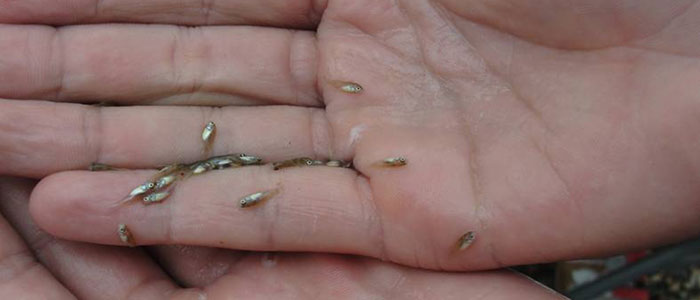
Gary’s explanation of the school’s worm casting waste system was too complicated for me to report on but suffice it to say, the fields at Big Red Farm are the beneficiaries of this beautiful “brew”. Not to mention all the biodegradable waste that stays out of the waste stream…
Lots of people will make the statement that there’s no relation to what is possible at an independent school with a budget that allows for greater flexibility in purchasing decisions and to some extent, that is correct. But the changes that Gary and Sustainable Fare have brought into the meal program for Lawrenceville’s students and staff is not only admirable but replicable in some ways at all types of schools when the alignment of stakeholders, commitment and the goal of change is embraced.
Gary started his company in 2007 with the goal to “get off the industrial food chain” and commit to a more sustainable method of providing school meals. With the creation of Sustainable Fare, he could get out of his office and make connections with people who grow real food. Finding out that there were true farmers selling at a market nine miles down the road in Trenton and that a farm adjacent to the Lawrenceville School’s property sold eggs and grew vegetables was an “aha” moment for him. Thus, an evolution began.
The change began when Gary and his staff slowly implemented new recipes into the cafeteria. His “1% change” mantra has been a guiding principal for making small changes in the school meals that can be implemented and sustained.
In 2001, the Lawrenceville School took part in helping to build the Lawrenceville Elementary School’s school garden by donating funds for the project. At the time, the outreach coordinator for the Northeast Organic Farming Association of New Jersey was Mikey Azzara, a resident of Lawrenceville who was working in local schools as a school garden educator. Mikey would invite Gary to the school to do demonstrations for the students at a time when school gardens weren’t pervasive nor were taste tests with local chefs, as they are in some districts now. [Full disclosure: Mikey Azzara is one of the original founders of the New Jersey Farm to School Network and currently owns Zone 7, a New Jersey-based farm-to-buyer food delivery business based in central New Jersey. Zone 7 is currently selling produce from many regional farms to the schools in the West New York school district in collaboration with food service director Sal Valenza from Nu-Way Concessionaires].
Involvement in this school garden start-up inspired Gary and the Lawrenceville School to plant their own organic garden on the grounds of the Lawrenceville school near one of the dining halls in 2004 and around the same time, Gary began purchasing local produce from Common Market, a Philadelphia-based farm-to-buyer business that originated out of Fair Food’s “Farm to Institution” program.
In 2011, Big Red Farm was created at The Lawrenceville School, a five-acre pesticide-free farm that now hosts an on-campus farmers market on Wednesdays and a CSA debit program for the campus community. The farm is run by Emma Morrow and her husband Jake, who also serves as a teacher at the school. The care of the farm entails working with student interns to teach them about growing practices and helping them learn to harvest the crops for sale. A unique aspect of the farm is that students can fulfill their athletic requirement for a semester by working on the farm for the fall or spring semester. Student interns help the Morrows care for the farm in the summer and make sure that it is up and running when students return in the fall.
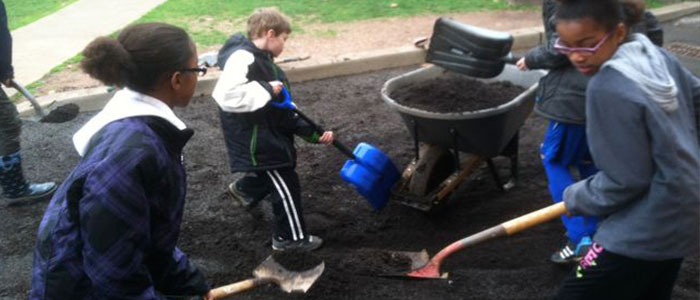
Students who board at the school often come out en masse with their housemates to plant crops on the farm, an enriching, bonding experience as well as an opportunity for hands-on ag education that creates interest and helps maintain the seasonal rotation of crops grown.
The cafeterias at the Lawrenceville School utilize the produce from the farm through an agreed-upon SSA (School Supported Agriculture) where Sustainable Fare purchases produce from the farm at fair market prices and uses the produce in all of its cafeteria meals during the season.
The farm’s beehives are just now starting to produce honey, but suffered a little this past winter as did most bees across the northeast. The clover crop planted around the school’s solar array didn’t make it, so the food source that was conveniently located to attract the bees, kind of took a hit. As all farming operations must do in a situation like this, plans are underway to plant another crop that will attract bees in the coming season.
There is no doubt that the Lawrenceville School community collectively supports these efforts where students are empowered to think about food and sustainability in their current life. We share this story with our Network in the hopes that you’ll find inspiration to model some of these programs and changes in your school environment and to celebrate National Farm to School Month in whatever way works in your school setting.
As mentioned at the beginning of this article, thanks, Gary for your inspiration and support.


